I know of no less than 13 web series about dating in LA and no less than 6 about anti-bullying. Even if they're great, they get lost in sea of sameness. I imagine there may be some other all-too-familiar topics beyond these 2. Why do what everyone else is doing already.
Showing posts with label social media. Show all posts
Showing posts with label social media. Show all posts
Wednesday, November 28, 2012


Monday, October 29, 2012
Privacy Evolves
Zach Cumer posted about Safety & Security for the now + the future and graciously invited me to comment. Here is what I wrote today:
Thank you for the invite to comment. I'm out and about right now, so here are some brief thoughts.
The Internet, social media and our digital devices have brought transparency to our lives and the organizations we interact with. That never quite existed like this before. The youngest generation's entire idea of privacy is different than older generations' tend to be.
This new transparency is a double edged sword. On the one hand information is more available and often more useful than ever before. On the other, what used to be physical things, the artifacts of our lives, have become increasingly digital. Not everyone is ready for or understands what this means, even though it has already happened in many ways.
Hurricane Sandy, the storm that is hitting the East Coast of the US right now, illustrates: the moment the Internet goes out, our lives are plunged into 1980 style existence. Anything online, "in the cloud," is suddenly unavailable. Even more, if power goes out too, much of our lives goes back to 1880. Once the batteries run out, we learn the hard way what not being ready for power outages, being "1880 compliant" as I call it, is. We aren't used to how to do things like they were done in 1880. At least not long term.
At a retail job I had just after high school, the store couldn't see what was in inventory, on its own shelves, if there was a storm. The storm made the satellite link to headquarters go down. And the store's local computers didn't have that information by themselves. Technically, this is a problem of not having business continuity in the event of natural disaster, or simple rainfall in their case. Today, millions of people and companies can't get to their own address books, music collections or email because of a storm. One hopes the data-centers that store our digital lives don't lose the data in the rain and wind. Once hopes we'll still be able to get to everything after the storm has past. We need life continuity whether our tech works or not.
But, back to the privacy issues your post brings up. We don't send postal mail in clear envelopes because everyone wants, even needs, some privacy in their lives. Privacy still matters, and many call personal privacy a basic human right. Chapter 2 article 7 of the Charter of Fundamental Rights of the European Union says [e]veryone has the right to respect for his or her private and family life, home and communications.
Yet despite privacy still going into laws, we don't have great answers for how our lives and our whole society are affected when privacy erodes accidentally, or through malicious breaches. Or simply because the privacy settings can be confusing.
From the scary sounding scenario of showing up online in the background of a stranger's photo auto-tagged by facial recognition, to the more likely possibility that you forget your smartphone at a bar, with your identity and financial data on it, we as a society are forced to rethink things. Beyond extremes like home break-ins because the people check in publicly online, or identity theft, there are other ways our privacy is dynamic. Web search histories and online profiles together are used to market things to us based on what we share with the world. What we share is both things we know about, like a restaurant review we know we wrote and share in public, and stuff we don't know about, like data from Google on flu searches getting used by the Centers for Disease Control to predict outbreaks more accurately. What do we want to have private and what can never be private again not matter how much we want it to be? As a civilization we lack great answers.
I have some ideas how to prepare ourselves. Computers are not just laptops and desktops, they are phones and tablets and gaming consoles and more. Computers and networks are designed to store and transmit information. From the rubber feet on the bottom, to the casing, to every line of code, everything about them is for keeping and sharing information; it is their fundamental purpose. Anything done to contain or remove information from computers and networks works against their foundation, their purpose. And that is why all ways to try to keep information private is going against the grain of computers. In a perfect world, a secret we want to have stay secret should never be digital. Once it is, the uphill battle of keeping it private begins.
There is almost no way to remember that things tend toward being stored and shared digitally. Even harder to live knowing this moment to moment. Our devices get so tangled up in our day to day lives, it's easy to be lulled into comfort. It is easy to ignore that our devices easily share anything and everything we put on them, and reveal everything we interact with. So try to brace yourself, if such a thing is possible. Brace yourself for having something of yours shared when you don't want it to be. This very possibly can happen to you and to me. We may want to prepare for what we do when our privacy goes away. This isn't actually a new thing. Secrets have become not secret for eons. Not always, but often.
Forever, bad things have sometimes happened to good people. Having your private stuff go public is just one way it can happen. Panic and fear are never a good answer. Be aware of what your devices and digital life might reveal of your life, thoughts and such. Be aware no one can be perfect in securing stuff. And beyond matters of life and death, like national security, try to be open. When you are open you get to be involved in how the world gets your private stuff. And for god's sake, don't use "password" or your name or someone's birth-date as your access code/pin/password.
Like having locks on doors, if you don't use the security things you have, then you don't get the security they can give. Put a passcode on your smartphone. That way if your phone is lost or stolen, your email, profiles and the information about all your contacts is less likely to be in the open. If you're worried dirty pictures or video you would take might end up on tv or something, don't take them. And breathe. Whether we like technology or not, it is not our enemy. And whether we want technology to be part of our lives or not, it isn't going away anytime soon.
Society can't really ever move beyond itself. As our sense of privacy evolves, there will be growing pains. And there's nothing horribly wrong with still using cash, or still getting a paper statement like it's 1880.
Tuesday, June 12, 2012
Everything is Global
You have to remember that in the age of Twitter and YouTube, nothing is a local event anymore. Every event is global, or can be global, within seconds
Aral Balkan writing about Microsoft's recent gaff in Norway (from The story behind that nasty Microsoft dance routine).
Thursday, April 12, 2012
Big Money is Big
Going by the $1 billion price tag, Facebook is paying about $33 for each Instagram user. That's a fraction of the $118 that Facebook investors will be paying per Facebook user if the company gets its expected $100 billion valuation after going public. By that math, Pachter said, $1 billon "doesn't sound crazy"
(from Barbara Ortutay).
Monday, October 24, 2011
Get Found: Lecture at USC Business School
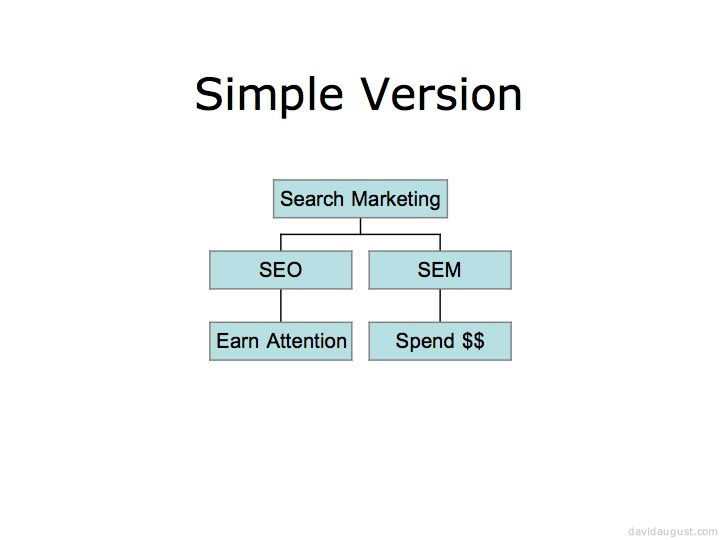
I'm guest lecturing at USC's business school tomorrow. Here's a sneak peak at 2 slides from my lecture "Improve the World → Make Things Findable" (they make more sense in the context of my whole presentation).

Sites I Cite:
http://davaug.com/befast
http://davaug.com/uptimematters
http://davaug.com/deadpagerank
http://davaug.com/write4search
http://davaug.com/filterbub
Monday, January 4, 2010
Social Media Marketing Explained in 61 Words
...you can earn attention by creating something interesting and valuable and then publishing it online for free: a YouTube video, a blog, a research report, photos, a Twitter stream, an ebook, a Facebook page
(from WebInkNow).
Monday, September 21, 2009
Scarcity and Social Media
In social media and in fact online in general many are trying to create scarcity as they would in the off-line world. This is a mistake that will, in pretty much every case, lead to destroying businesses and brands.
Seth Godin has written some interesting Principles of Scarcity and points out that with scarcity the ...danger is that you can kill long-term loyalty. You can annoy your best customers. You can spread negative word of mouth. You can train people to hate your scarcity strategy.
Saturday, June 13, 2009
Social Media Salaries
There are no surprises, but I can tell you that consulting fees range from $20 an hour to $400 an hour, salaries range from $24,000 a year to $170,000, and the difference is based almost entirely on your non-social media employment background
(from Social Media Headhunter).
Friday, February 6, 2009
Social Media is Not Broadcast
Many companies want to use social media as a channel to push marketing messages at customers, while those customers are using social media as tools to connect with and communicate with others. They have almost zero interest in receiving marketing messages via social media, so predictably, companies that try to do just that, see their efforts falter.
If you want to use social media, consider why and how your customers use social media, and align your goals for your efforts accordingly.
Remember that at the end of the day, you are wanting to reach people. Respect them and their time, and you'll be rewarded for your efforts
(emphasis added, from Why Your Community-Building and Social Media Efforts Aren't Working).
Thursday, February 5, 2009
Loving Fan Mash-Ups of Your Work
Cobbling, the word a PDF presentation 'Sailing the C’s of Change' by Kate Rutter, uses for mash-ups, work arounds and adaptations, can start to be embraced with these steps:
- Accept that cobbling will happen. Look beyond the threats to see the opportunities.
- Screws, not glue. Make it easy to open [DRM-free might be the equivalent for online video and social media].
- Decide who has the first response: legal or marketing.
- Identify and participate in emerging communities about your products.
Monday, January 26, 2009
Campaigns Are for Wars, Not Web
Most large brands, and the agencies that represent them, are still thinking in what I [Jackie Peters] like to call a "campaign mentality." Prior to the social web and the democratization of everything, pretty much all marketing strategy was campaign based. Let's think about how campaigns work: they are typically top-down, one-directional, one-to-many crusades designed by the originating party to convince an "audience" of something. Essentially, this mentality is the antithesis of how the social web works. For marketers to be successful on the social web, whether they are a big brand or a small one, they need to start thinking about contributions and let go of the campaign mentality
(from heavyBlog). A short name for the social media efforts done in the service of a larger marketing plan is often "social media campaign" as if people are to be carpet bombed. Something equally concise is "social media initiative" and suggests beginning something, like a conversation.
I've also begun to reconsider the word "target" when discussing the intended recipients of a message. Perhaps "audience" or "people" as the identifier may work better.
Tuesday, December 30, 2008
Social Media Must Be Done by You
Having an actual personal connection with your audience means you have to be the one that responds to comments, emails, tweets, phone calls
(from tubefilter.tv).
Monday, December 15, 2008
Brands Engaging Directly with Consumers Win
A new online Word of Mouth Marketing research study conducted by OTX, a global consumer research and consulting firm, confirms the value of brands engaging directly with consumers online. The initial findings of the new study, "The Impact of Social Media on Purchase Behavior," revealed that 54% of consumers agree that information from a brand representative would be more valuable than what is typically found on a company website
(from Yahoo! Finance).
Wednesday, December 10, 2008
ROI of Social Media
The answer to "What is the ROI of Social Media?" can be another question: "What is the ROI on putting on your clothes in the morning?" I didn't come up with it, and I'm not sure who said this.

They were stressing the necessity for organizations to be active in Social Media. You will be talked about via Social Media, and you must decide if you want to be part of those conversations, or at their mercy (to some extent).
Friday, October 24, 2008
Invest in Social Media In This Economy
...within digital, the more 'traditional' forms (banner ads) will slump compared to online video, widgets, and social networks, on which spending next year will increase by 70 percent. The more accountable the media, and the more targeted, the better
(emphasis added, from MediaBizBlogger).
Tuesday, October 14, 2008
Social Media Transforming How People Buy
The result of this new revolution is that we look to and trust new sources for information and the research clearly shows we now trust the opinions of strangers we read online as much as our closest friends and certainly more than advertising. This demonstrates the fundamental importance of the social media revolution that we are living through now.
What do we say to our clients? Participation in social media is not a choice, it is now a default. This is a consumer revolution, they choose who takes part and they are already talking about and commenting on all brands. It is down to companies to decide whether to be actively or passively involved.
Secondly, transparency is essential. Consumers are constantly commenting on products and brands, so honesty and openness are vital. Companies should share their inner workings. Mistakes have to be admitted quickly and control has to be loosened to allow consumers to discuss, share and interact with your brand
(emphasis added, from mashable.com).
Thursday, October 9, 2008
When to Start Social Media
If you want to get involved in social media, the time to do so is months before you want to use the platform to push a message. Building a reputation in a community and laying the groundwork for search engine optimization and traffic should be occurring months before you write the first piece of code or buy your first ad
(from socialmediaheadhunter.com).
Wednesday, August 27, 2008
Twitter With Full URLs
When twittering, or otherwise posting a URL online, putting the http://www prefix on the web address will automatically be recognized as a URL and be made a link by various systems (e.g., Google's spiders, twitter's web interface, tweetie, etc.).
Facebook, for instance, automatically recognizes a full URL and makes it a link almost everywhere, and includes the page description and image in messages and wall posts. You can customize the default image, title and description that Facebook sharing uses too.
Thursday, August 21, 2008
Social Media Video Can Be a Conversation
As Mashable points out, EA has successfully navigated what could become a negative demerit amongst the hardcore fans of the game franchise into a widely talked about marketing move.
The video is talking with, not at, customers. And it's fun.
Friday, August 8, 2008
Social Media eBooks
A friend mentioned a list of eBooks about Social Media; it looks like a good one.
Subscribe to:
Posts (Atom)